

Car paint protection film bubbles or peels primarily due to poor surface preparation, improper installation techniques, and inadequate curing time. If contaminants are trapped underneath or the edges are not sealed correctly, the adhesive fails to bond securely to the vehicle’s clear coat. Using low-quality film or neglecting crucial post-installation care timelines also dramatically increases the risk of lifting over time.
The Core Culprits: Why Protective Films Fail
The long-term durability of any clear bra depends heavily on the initial chemical and physical bonds formed between the acrylic adhesive layer and the automotive clear coat. If anything interrupts this bonding process, the film will inevitably lift. Below are the primary technical reasons behind these failures:
- Surface Contaminants: Microscopic particles of dust, industrial fallout, leftover detailing wax, or ceramic coatings act as physical barriers. If they are not completely stripped away before installation, the adhesive binds to the contaminants rather than the paint, resulting in localized air pockets.
- Improper Stretching Techniques: Every polyurethane film has a specific elastic threshold. When an uncertified installer over-stretches the material to make it fit complex contours or deep bumper recesses, the film constantly tries to snap back to its original shape. This continuous physical tension eventually overcomes the adhesive strength, causing the edges to pull back and lift.
- Incorrect Slip Solution Ratios: The specialized solution used to position the film must feature a precise ratio of water, isopropyl alcohol, and soap. Using too much soap leaves behind a slippery residue that permanently degrades the adhesive’s chemical bonding capacity. Conversely, too little alcohol prevents the solution from evaporating efficiently, locking in moisture.
- Rushed Curing and Environmental Exposure: Paint protection films require a crucial curing window, typically spanning 3 to 7 days, depending on the local climate. Exposing the vehicle to heavy rain, freezing temperatures, or high highway speeds immediately after installation can disrupt the unsettled adhesive, forcing moisture or wind right beneath the edges.
Installation Mechanics vs. Environmental Factors
To accurately identify the root cause of a failing installation, it is helpful to categorize failures based on whether they stem from the installation laboratory environment or post-handover environmental stressors. For example, while driving frequently near Auburn or Spanaway exposes a vehicle to diverse road debris and variable moisture, a pristine, climate-controlled shop environment minimizes installation-phase errors entirely.
| Failure Type | Primary Cause | Early Warning Signs | Long-Term Result |
| Workmanship Issue | Poor edge trimming or inadequate material stretching during application. | Tiny “fingers” or small lifting lines along the panel edges. | Large-scale peeling, dirt accumulation under the film, and total edge failure. |
| Preparation Failure | Leftover ceramic coatings, iron particles, or clay bar residue on the paint. | Small, localized bubbles are forming in the flat center areas of panels. | Total adhesive breakdown and wide-scale film separation from the clear coat. |
| Environmental Stress | Using a high-pressure washer too close to the edges too soon after installation. | Slight lifting or curl-back around complex contours or parking sensors. | Water intrusion underneath the film, causing major bubbling and cloudiness. |
Debunking the Myth: “All Bubbles Mean a Bad Install”
A common industry misconception shared among vehicle enthusiasts is that any visible bubble immediately following an application indicates a botched job or low-quality materials. This is fundamentally false. It is crucial to distinguish between installation errors and the natural physical behavior of advanced polyurethane films.
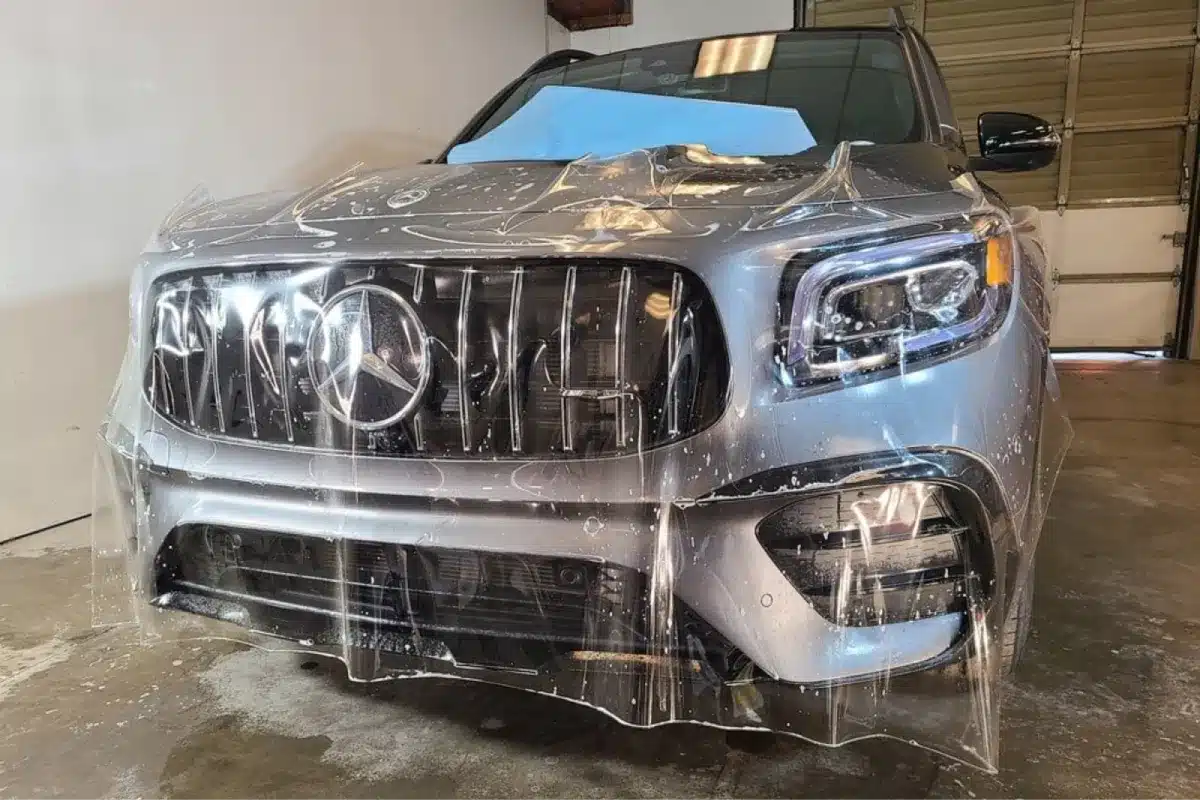
During a professional wet installation process, moisture is intentionally trapped beneath the film layer to allow the technician to slide, position, and perfectly align the material. While high-grade squeegees express the vast majority of this fluid, tiny microscopic pockets of moisture inevitably remain. These are known as “water blisters.” Because modern premium films are engineered with highly breathable, porous polyurethane structures, these water blisters will naturally transpire and evaporate through the surface of the film over a period of 2 to 4 weeks. True air bubbles, however, possess distinct, crisp edges, contain no liquid, and will not disappear on their own; these require professional deflation or resetting by a certified specialist.
Applying Our Trusted Expertise and Durable Vehicle Protection to Solve This
At our facility, we utilize our proprietary quality assurance framework to completely eliminate the risk factors that lead to premature bubbling, lifting, and peeling. Where expert craftsmanship meets unmatched protection, our certified specialists execute a rigorous multi-stage preparation and installation workflow engineered to counter the challenging environmental factors faced by vehicle owners relying on professional paint protection film in Joint Base Lewis-McChord, WA.
With over 34 years of experience and 1,500+ completed projects, our system focuses on high-quality satisfaction by completely eliminating human error from the installation process. We pair premium quality products with a clinical, four-phase workflow designed to secure guaranteed protection.
Through this execution of precision craftsmanship, we ensure unmatched care for your vehicle’s beauty and longevity and provide a notable value enhancement. Car owners can ride easily knowing they have received a professional installation you can trust, with satisfaction guaranteed.
Film Specifications and Material Anatomy
To better understand why premium clear bra products withstand environmental stress while cheaper alternatives fail, it is useful to review the core structural layers that make up high-performance paint protection film in Joint Base Lewis-McChord:
- Top Coat Layer: A specialized, self-healing elastomeric polymer coating that automatically repairs minor wash swirls, fine scratches, and abrasions when exposed to warm sunlight or engine heat.
- Polyurethane Core Layer: A highly durable, impact-resistant, and optically clear thermoplastic polyurethane sheet designed to absorb and dissipate the kinetic energy of flying rocks, road salt, and harsh debris.
- Acrylic Adhesive Layer: A pressure-sensitive, advanced acrylic copolymer engineered to maintain a permanent, optically transparent bond with automotive clear coats without yellowing, clouding, or damaging the underlying paint upon eventual removal.
Experience Excellence with Our Premium Auto Care Services
Preventing paint protection film from bubbling or peeling requires an uncompromising combination of elite materials, controlled environments, and highly skilled hands. At Show Room Auto Tinting, our brand is professional and detail-oriented. We strive to ensure that your vehicle maintains a factory-new appearance for years by employing certified installers who deliver the highest level of detail.
Whether you are seeking solutions for Joint Base Lewis-McChord, WA, paint protection film or looking for elite care near Seattle, we offer premium ceramic coatings, window tinting, and premium detailing backed by transferable warranties to protect your car from UV rays, bird droppings, and acid rain.
Ready to secure guaranteed protection and industry-leading craftsmanship for your vehicle? Learn more on our dedicated service page for paint protection film and contact us today to request your comprehensive, no-obligation quote.
People Also Ask
What should I do if I notice a bubble on my new paint protection film?
If the installation is less than a month old, leave the bubble completely alone. It is highly likely a moisture blister that will naturally evaporate. Never attempt to pop, prick, or squeeze the bubble yourself with a pin, as this punctures the self-healing top coat, allows dirt to enter, and instantly voids your product warranty.
How long must I wait to wash my car after a clear bra installation?
You must wait a minimum of 7 days before washing your vehicle to ensure the pressure-sensitive adhesive layer completes its initial cure cycle. When you perform your first wash, avoid automated car washes entirely. Stick to hand washing and ensure high-pressure spray nozzles remain at least 12 to 18 inches away from all film edges and seams.
Why is the film along my fender or hood edges starting to lift?
Edge lifting typically points to an installation error, such as over-stretching the material beyond its physical limits or failing to thoroughly clean the hidden, inner lips of the body panels. It can also be caused by strong wind resistance or close-range pressure washing, catching a seam that was not fully wrapped or sealed during the initial application.