

Ceramic coating is a liquid polymer solution that chemically bonds to a vehicle’s paint to form a hydrophobic protective layer, but it is not thick or flexible enough to absorb mechanical impacts like rock chips or heavy key scratches. While it earns a hardness rating up to 9H on the pencil scale, it primarily guards against chemical corrosion, UV degradation, and light wash marring rather than deep physical gouges. To achieve optimal longevity and surface clarity, vehicle owners must understand the distinct functional capabilities and limits of professional ceramic formulas.
Ceramic Coating Grades and Coating Layers: A Direct Comparison
Selecting the right level of ceramic defense depends on your driving habits, vehicle storage, and long-term protection goals. Professional nanoceramic formulations vary in concentration, layer thickness, and expected durability.
| Ceramic Coating Level | Active SiO₂ / SiC Concentration | Applied Thickness | Primary Defensive Focus | Expected Longevity |
| Entry-Level (1-2 Years) | 30% – 50% | ~0.5 to 1.0 micron | Hydrophobic water-beading & high gloss | 1 to 2 years |
| Mid-Tier Professional (3-5 Years) | 60% – 75% | ~1.0 to 1.5 microns | Environmental acid defense & UV blocking | 3 to 5 years |
| Multi-Layer Flagship (7-9+ Years) | 80% – 90%+ | ~2.0 to 3.5 microns | Maximum chemical immunity & micro-marring defense | 7 to 9+ years |
Why Ceramic Coatings Cannot Prevent Physical Gouges and Impact Scratches
To understand why liquid ceramic coatings fall short against flying stones or direct physical keying, we must look at the mechanical limits of cured nanoceramics:
- Microscopic Layer Thickness
- When a professional application cures, the resulting liquid-turned-glass matrix measures only 1 to 2 microns thick (where 1 micron equals 0.001 millimeters).
- In comparison, standard automotive clear coat is roughly 35 to 50 microns thick. A microscopic shell thinned out across your vehicle’s body panels simply lacks the structural mass to absorb heavy mechanical force.
- Hardness vs. Flexibility Mechanics
- The automotive industry frequently advertises ceramic products with a “9H” rating, which refers strictly to the Pencil Hardness Scale, not the Mohs scale used for diamonds.
- While 9H pencil hardness resists scratches from graphite, high surface hardness without physical elasticity makes the micro-layer brittle under impact, allowing kinetic energy from road debris to pass directly into the clear coat.
- Lack of Self-Healing Polymer Properties
- Cured nanoceramics form a rigid silicon dioxide or silicon carbide matrix without elastic memory.
- Once a hard or sharp object cuts into the cured coating, the layer cannot rebound or flex; the scratch remains permanent until physically polished out.
What Real-World Protection Does Ceramic Coating Actually Provide
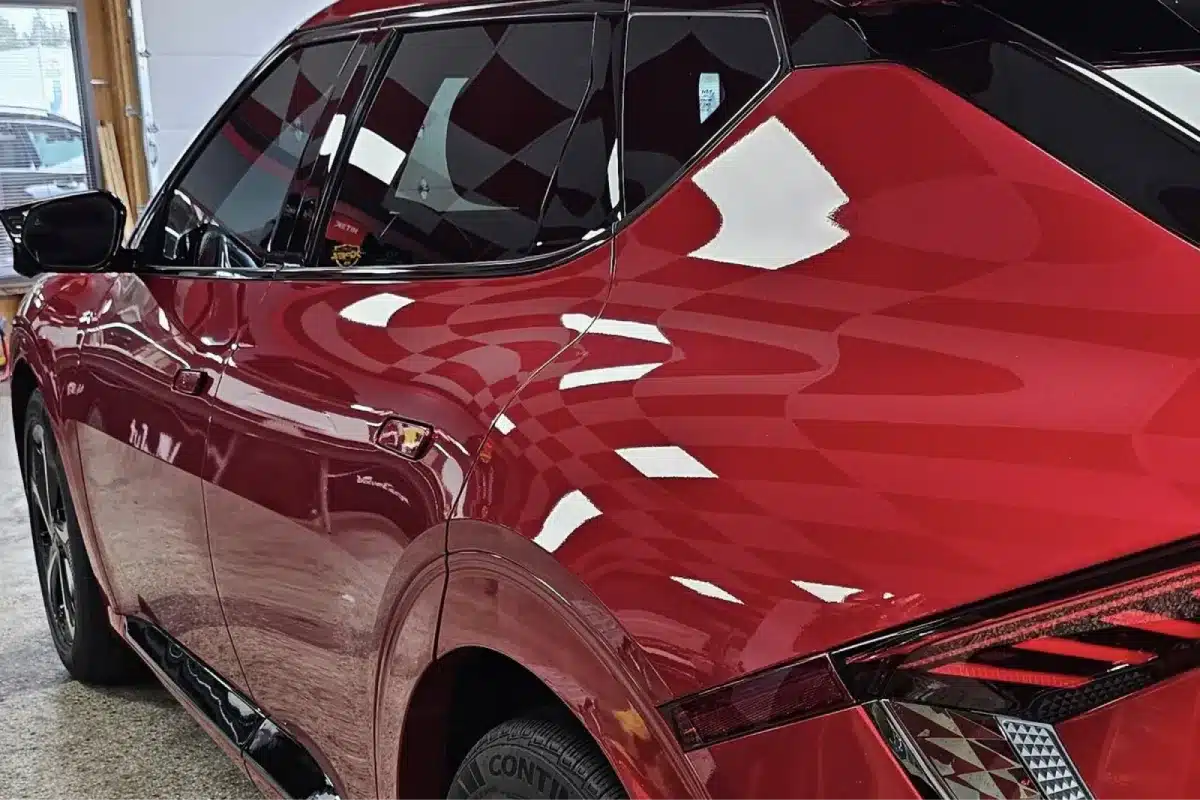
While it won’t make your bodywork bulletproof, its true value lies in preserving paint clarity and preventing atmospheric decay. Vehicle owners who choose high-grade Tacoma ceramic coating enjoy severe environmental defense that factory clear coats simply cannot offer on their own.
Debunking the Myth: “Ceramic Coatings Eliminate the Need for Maintenance Washes”
The Reality Behind the Myth
A frequent industry misconception is that a ceramic-coated car becomes “self-cleaning,” allowing drivers to skip regular washes or run their vehicles through automated touch-style car washes without consequence. In reality, road film, industrial fallout, and mineral deposits still bind to the hydrophobic lattice over time, gradually clogging the ceramic structure if not washed away. Furthermore, automated commercial car washes rely on aggressive brushes embedded with grit from previous vehicles alongside extreme industrial detergents (with pH values under 2 or over 12) that physically scour the coating and inflict severe swirl marks. Ultimately, maintaining a coating’s optical clarity and transferable warranty requires routine, gentle hand washing using pH-neutral automotive shampoos and proper two-bucket microfiber washing techniques.
Applying Our Professional Expertise to Solve This
Applying our trusted expertise and durable vehicle protection to solve this challenge requires a comprehensive, multi-step care strategy. With over 34 years of experience and 1,500+ completed projects, our team delivers trusted premium detailing services supported by 480+ positive reviews. We focus on high-quality satisfaction, inviting every vehicle owner to experience excellence with our premium auto care services.
Through certified precision and trusted expertise, we have established a detailing studio where expert craftsmanship meets unmatched protection. By combining premium quality products with our unmatched expertise, we deliver a professional installation you can trust, with satisfaction guaranteed. Ultimately, this approach ensures unmatched care for your vehicle’s beauty and longevity through precision craftsmanship, guaranteed protection, and lasting value enhancement.
During a recent vehicle evaluation for a client commuting daily between Seattle, Spanaway, and Auburn, we observed heavy road salt residue, mineral etching, and fine surface swirling caused by harsh Pacific Northwest winter driving. To fully restore and shield the vehicle, we implemented our three-tier application process:
- Precision Surface Evaluation & Paint Correction: Before locking in any surface beneath a coating, our certified technicians execute a thorough chemical decontamination wash and multi-stage machine polish. Removing pre-existing swirls, oxidation, and scratches ensures the chemical bond meets the absolute highest standard of optical clarity.
- Hybrid Application Strategy: We combine high-impact Paint Protection Film on vulnerable front panels (hood, bumpers, mirrors) with premium ceramic coating in Tacoma, WA across the remaining paintwork. This delivers self-healing rock chip defense where impacts happen most, paired with deep gloss and easy cleaning everywhere else.
- Infrared Curing & Final Inspection: We utilize shortwave infrared curing lamps to force-cure the ceramic matrix to maximum surface hardness before the vehicle encounters outdoor driving conditions in Tacoma, WA, ensuring maximum durability.
Protect Your Investment with Proven Expertise
At Show Room Auto Tinting, our brand is professional and detail-oriented. With over 34 years of experience, we strive to ensure that your vehicle maintains a factory-new appearance for years. We prioritize customer satisfaction by employing certified installers who deliver the highest level of detail. Our commitment to quality is reflected in our use of top-tier products that carry full transferable warranties, adding real value to your vehicle.
We want you to feel confident and assured, knowing that your vehicle is protected and maintained by experienced professionals dedicated to excellence. Whether you need a premium ceramic coating, window tinting, or full paint protection films, our team delivers long-term defense against environmental threats while drastically reducing your maintenance routines.
Ready to enhance your vehicle’s gloss and safeguard its finish for the long haul? Contact us today to request a quote or discuss your vehicle protection goals with our expert team.
People Also Ask (FAQ)
Does a 9H ceramic coating mean it is as hard as a diamond?
No. The “9H” designation refers to the hardness rating on the Pencil Hardness Scale (which ranges from 6B to 9H). On the Mohs scale of mineral hardness, a 9H pencil rating equates to roughly 3 to 4, whereas a diamond rates at a 10. It indicates high resistance against graphite scratching, not mineral or metal impacts.
Will ceramic coating stop rock chips on the highway?
No. Ceramic coatings cure to a microscopic thickness of 1–2 microns, which lacks the mass and elasticity required to absorb high-velocity impacts from stones or road debris. To protect your vehicle against rock chips, you need a dedicated Paint Protection Film (PPF).
How do I protect my car from both deep scratches and chemical stains?
The most effective solution is a hybrid system. Install Paint Protection Film on high-impact zones (front bumper, hood, fenders, and side mirrors) to absorb physical debris and scratches, then apply a professional ceramic coating over the entire exterior to handle UV protection, chemical defense, and hydrophobic self-cleaning.
How long does a professionally applied ceramic coating last?
Professional-grade ceramic coatings last anywhere from 2 to 9+ years depending on the specific formula used, the quality of surface preparation, environmental storage conditions, and adherence to proper hand-washing maintenance.